
 VOICE-FIRST FIELD INSPECTION REPORTING
When you’re building a business like HAMI Voice, there isn’t really a ‘typical day’, and no one knows this better than our CEO, Inese Pritchard. One day might be spent testing inspection templates in an industrial yard, another in meetings with customers, and another working out how a trip to Houston could open the next set of doors.
So, knowing what a busy bee she is, we told her to put her own product to good use and give us a day in the life piece using HAMI Voice.
Did she stop four times during an already packed day to carefully document what she was doing?
Of course not.
The following morning, when she finally had a moment to sit down with breakfast and a coffee, she opened HAMI Voice and talked through the previous day instead. Four simple voice entries covered where she’d been, who she’d spoken to and what had stood out. HAMI Voice then turned those slightly more relaxed breakfast ramblings into the structured report that became the starting point for this article.
(If we’re honest, it could probably have written the whole article too, but then I’d be out of a job.)
This is what one fairly typical, very full day looked like for the Queen B herself.
Starting the day with Opportunity North East
Before the meetings, customer conversations and business development came the usual morning routine: getting the children ready for school, sorting breakfast and taking the dog out before heading off for the first appointment of the day.
The morning session was a sales growth meeting organised by Opportunity North East. The focus was less on traditional sales techniques and more on understanding human behaviour: what customers actually value, what makes them hesitate, and what pushes them to have enough confidence to move forwards.
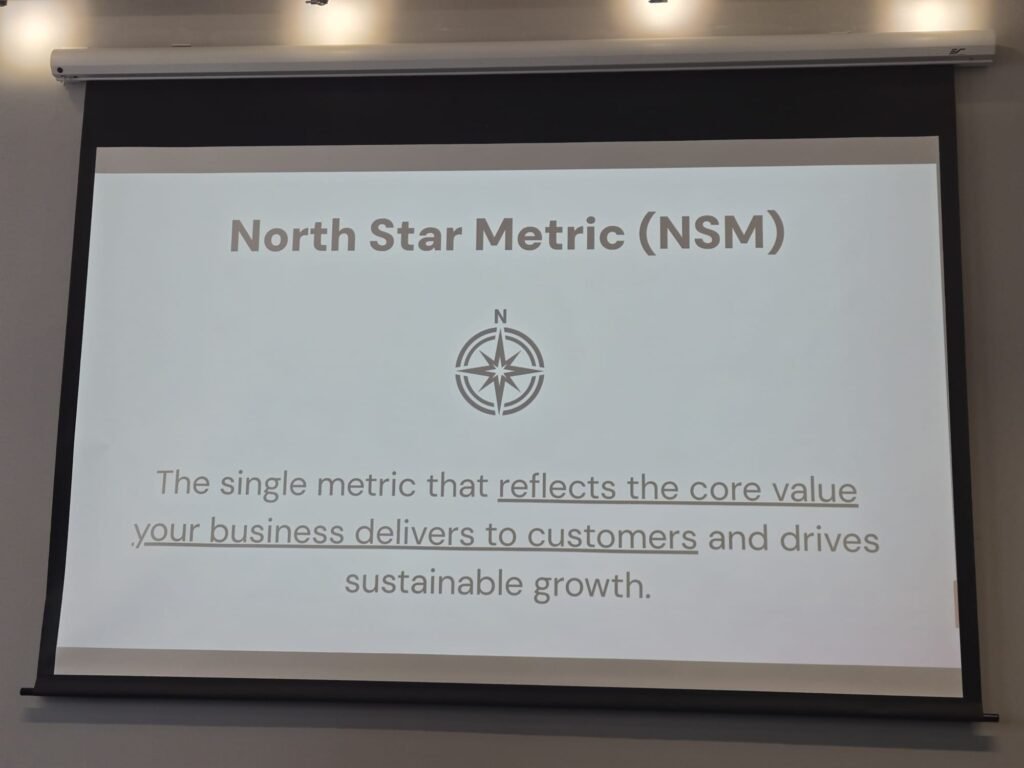
For Inese, one of the most useful parts wasn’t a presentation or a complicated sales framework. It was a good old sheet of paper.
The exercise involved writing down examples of real customer conversations: what people liked about the product, what they didn’t, where the value was obvious and where it perhaps hiding in plain sight. Working through those examples made it easier to look at customer conversations from the other side of the table rather than simply thinking about what HAMI Voice wanted to sell.
That matters when you’re developing something new. You can be completely convinced by the technology and still miss the question that matters most to the person sitting opposite you:
How does this help me.
Back to one of the customers who was there at the beginning
The next part of the day was a meeting with Alex at Intervention Rentals, one of the earliest customers.
To us, these relationships are more than just commercial gratification or reviews. Early customers have seen the product when it was rough around the edges, heard the ideas before every detail was worked out and, when you’re lucky, become comfortable enough to tell you when something doesn’t make sense.
The conversation covered their use of E2E CRM, but inevitably moved into HAMI Voice and AI as well. The interesting part wasn’t simply discussing where another AI feature could be added. It was trying to separate the genuinely useful opportunities from the chaos that is the AI marketplace right now.
That is becoming an increasingly important distinction for us.
There is no shortage of things that can be built with AI. The more useful question is whether you should use AI and does building them solve a real problem for the company that has to use them.
The meeting also moved into conversations around sustainable solutions and opportunities connected with renewable and energy requirements, giving the afternoon the kind of slightly sprawling quality that good customer meetings often have. You start with one piece of software and, a couple of hours later, you’re talking about where the business might be heading next.
Then Houston entered the chat.
Inese is preparing to travel to Houston with SNABC, which meant part of the afternoon disappeared into research, messages and conversations with existing contacts in the city.
The trip itself was already happening, but there was still plenty to work out beforehand. Who should she speak to? What connections could provide a useful introduction? Was there an opportunity for a genuine soft landing in Houston rather than simply arriving with a list of meetings and hoping for the best?
That is the less visible side of business development. A trip might eventually produce photographs from an event, customer meetings and announcements, but before any of that comes then grunt work.
And somewhere amongst all of it, the normal day to day work still has to happen.
The working day ends. The day doesn’t.
Once the meetings were finished, Inese switched back from business mode to everything else.
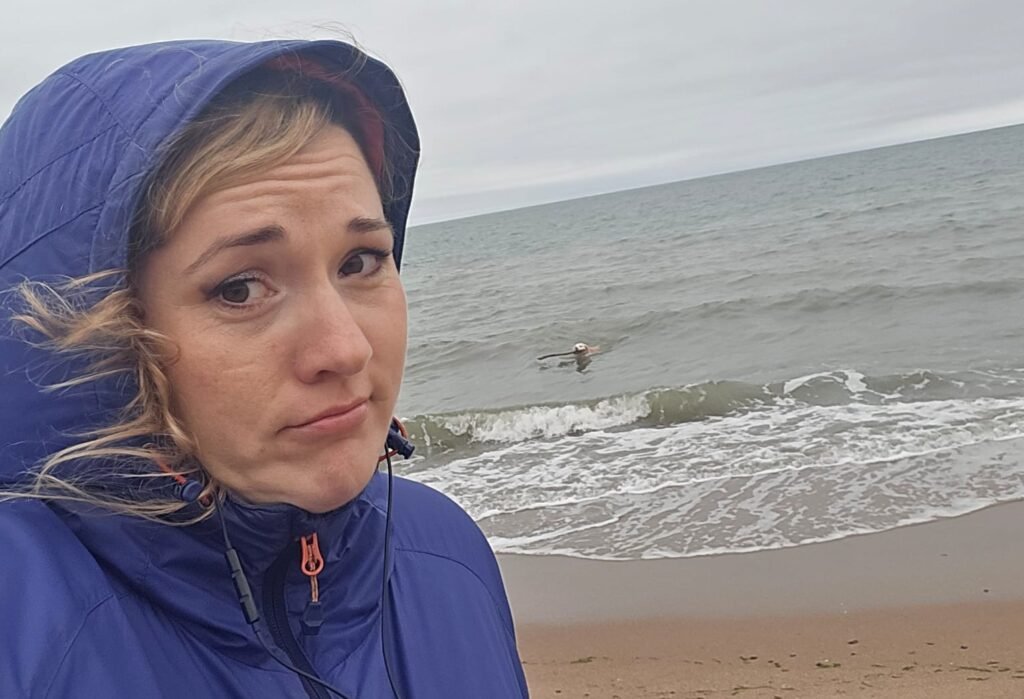
Her son needed dropping off at football, which created enough time for a walk along the beach with the dog. With a sore shoulder slowing her down a little, it was not exactly a high-speed expedition, but there was still time for a walk and an ice cream before heading home.
By then it was around eight o’clock, and there were still the usual things waiting at home: food, washing and everything else that somehow doesn’t disappear just because the working day has been busy.
(When will AI get started on that? Asking for a friend.)
That was the day.
A business growth session, a long-standing customer meeting, discussions about AI and sustainable solutions, planning for Houston, school runs, football, a dog walk and an ice cream.
Not particularly glamorous. Not particularly tidy either.
Probably much closer to what building a growing business actually looks like compared to what you see on some Instagram accounts.
And HAMI Voice gave her the chance to write this over breakfast and a coffee
There’s a slightly ridiculous circularity to this article that we rather like.
HAMI Voice is normally being developed and tested around structured inspection reporting. This time, Inese used it to reconstruct her own day while eating breakfast the following morning.
She didn’t need to spend the evening writing notes or trying to turn the day into something readable after getting home at eight o’clock. Once she had a bit of breathing room the next morning, she simply talked HAMI Voice through what had happened: the morning session, the customer meeting, Houston planning and everything that came afterwards.
Because it was still fresh in her head, the detail was there. HAMI Voice gave those thoughts a structure and produced the report we then used as the source for this blog.
We aren’t suggesting that Day in the Life reports are about to become the next major HAMI Voice update.
But it accidentally demonstrated the same principle we keep coming back to in inspection work.
You don’t always need to document something at the exact second it happens. Sometimes the work comes first, and the reporting happens when you have the time and space to do it properly.
And when the information is still in your head, sometimes the easiest thing to do is simply say it.
The structure can come afterwards.

0 Comments