 VOICE-FIRST FIELD INSPECTION REPORTING
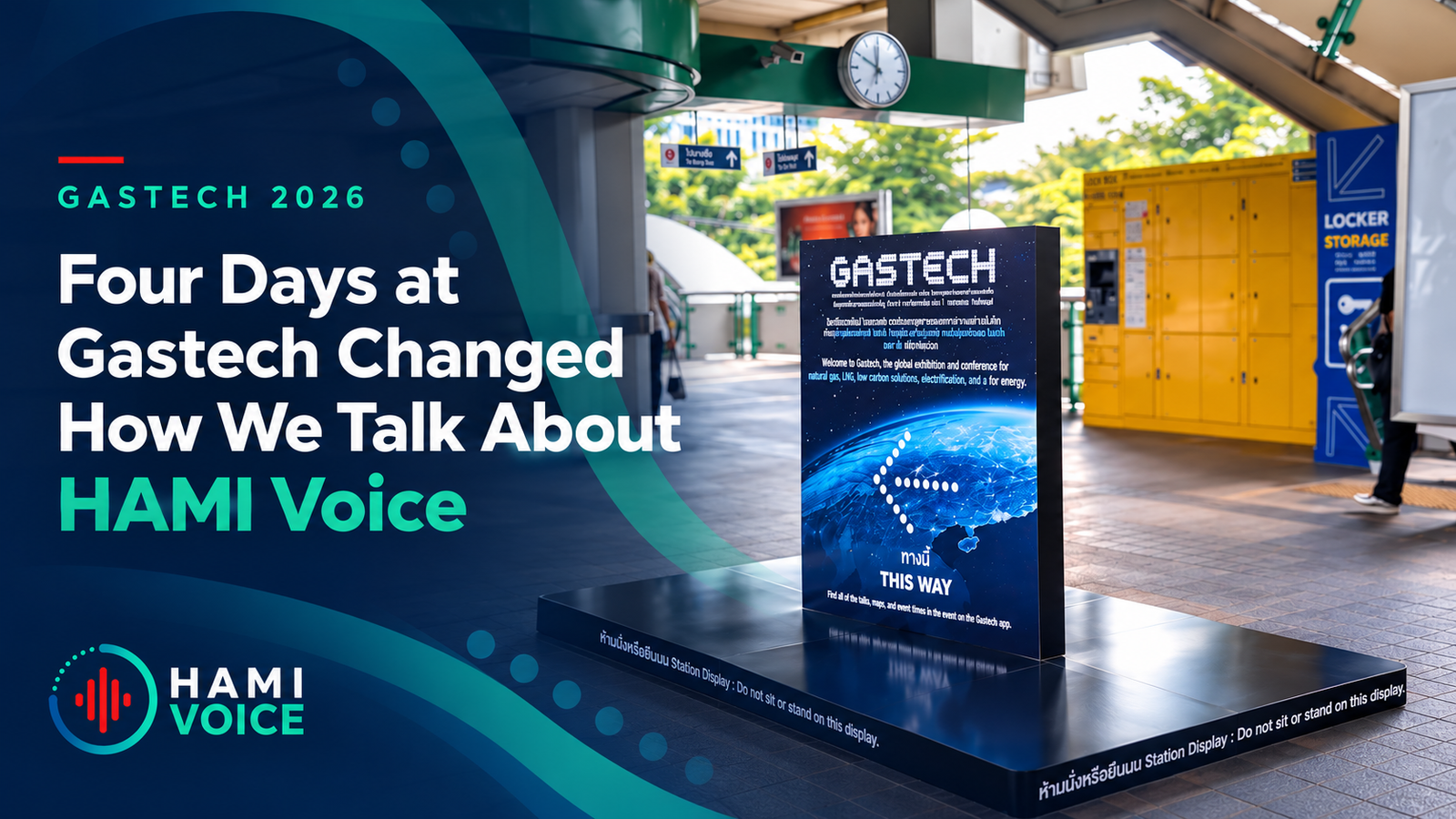
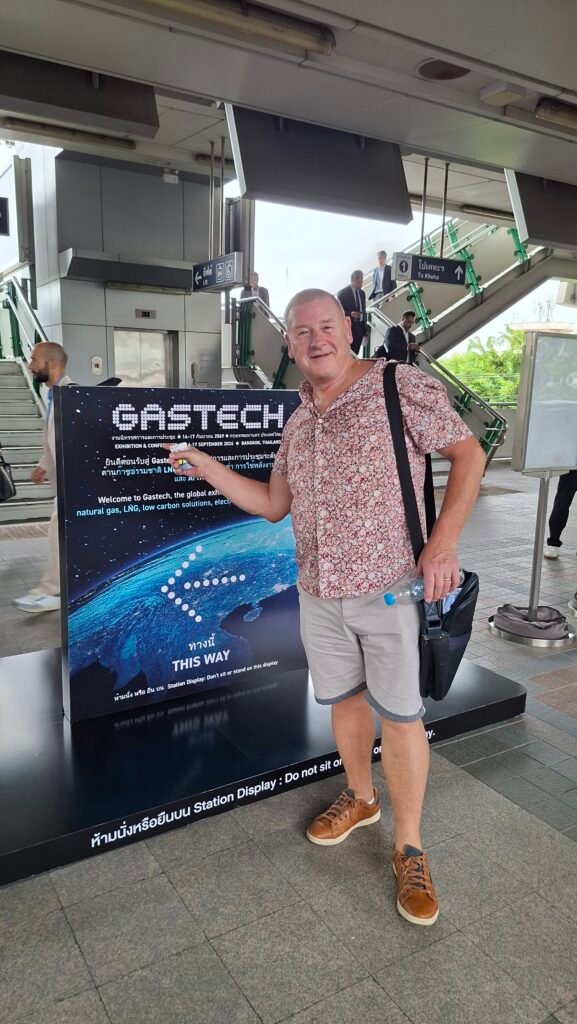
We went to Gastech 2026 for a fairly simple reason: our future customers were going to be there.
In normal day-to-day business, getting in front of the right person can mean emails, introductions, diary juggling, presentations and several rounds of “does Tuesday at 2pm work?” At an event like Gastech, the VP of Sales, company founder, technical director or person actually responsible for the problem you’re trying to solve could be standing three metres away.
That changed our approach.
Instead of sending a presentation and hoping somebody opens it, you can talk to someone, understand what they do and, if it makes sense, pull out a phone and show them HAMI Voice there and then.
More importantly, they can challenge you. They can ask the awkward questions, tell you what they already use, point out where your product wouldn’t fit their workflow and occasionally ask something that you immediately write down afterwards and underline three times what a note that says: We need to work on this.
That was probably the biggest value of four days in Bangkok.
First reaction: how are we ever going to get around all of this?
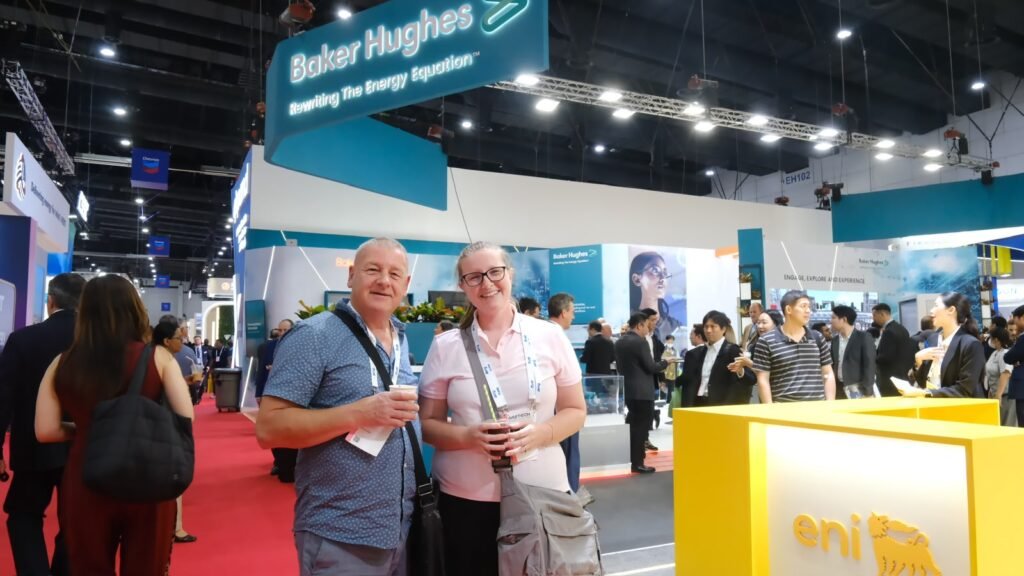
Gastech is enormous.
On day one, we were actually surprised that it didn’t feel quite as busy as we expected. There was still plenty happening, but considering the scale of the exhibition, we had imagined being swallowed by crowds from the moment the doors opened.
Then day two happened.
Suddenly walking in a straight line became an achievement. It was like the human equivalent of dodgems (bumper cars for our international audience). Conversations were happening everywhere, the aisles were packed and a fairly significant percentage of the day involved apologising while squeezing around somebody.
The size of the conference itself was probably the most intimidating part at first. There were so many companies and stands that we genuinely wondered how we were supposed to get around enough of them to make the trip worthwhile.
But never fear, our subconscious had a strategy.
On the second day, several of the completely random conversations we started turned out to be with other Scottish attendees. With people from all over the world in one place, we somehow kept finding our own. I guess we were drawn to the banter.
We did eventually make an effort to broaden our horizons.

We expected AI everywhere. What we found was much more interesting.
Going into a major energy technology conference in 2026, we expected AI to feature heavily.
What we didn’t expect was the tone of the conversation.
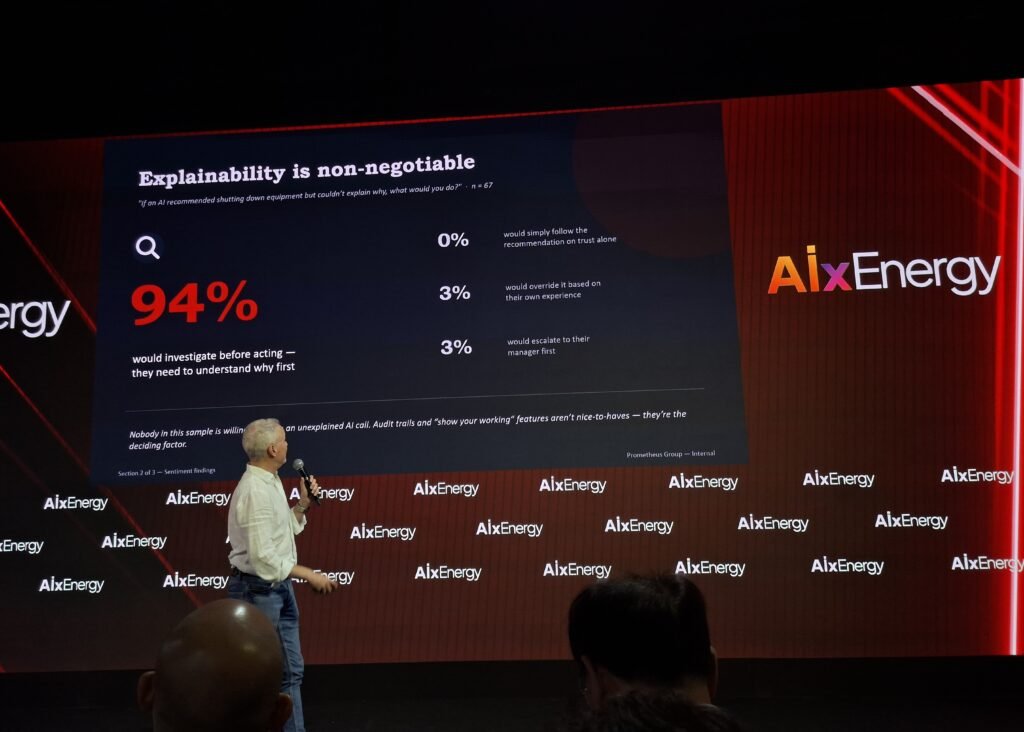
Rather than four days of people telling us that AI was about to solve everything, some of the most interesting panels were discussing exactly the opposite: the dangers of over-reliance, where human judgement still matters and what happens when an automated system disagrees with an experienced operator.
One discussion posed a question along the lines of this: if an experienced operator sees something unusual and believes a machine should be shut down or restarted, but an AI system says there is no problem, which one do you listen to?
That caught our attention.
Not because there is a neat answer that works in every situation, but because it reflected something we have been thinking about while developing HAMI Voice.
Technology should help the person doing the job. It should not automatically become the authority over them.
An inspector, technician or operator brings experience, context and professional judgement that cannot simply be ignored because software has produced a different answer. HAMI can help capture that person’s knowledge, structure it and reduce the administrative work surrounding it, but the expertise still belongs to the human. There are no hallucinations or HAMI adding in its tuppence worth.
The more conversations we had at Gastech, the more important that distinction became.
Showing HAMI Voice without launching straight into a sales pitch
Our demonstrations usually began without the phone.
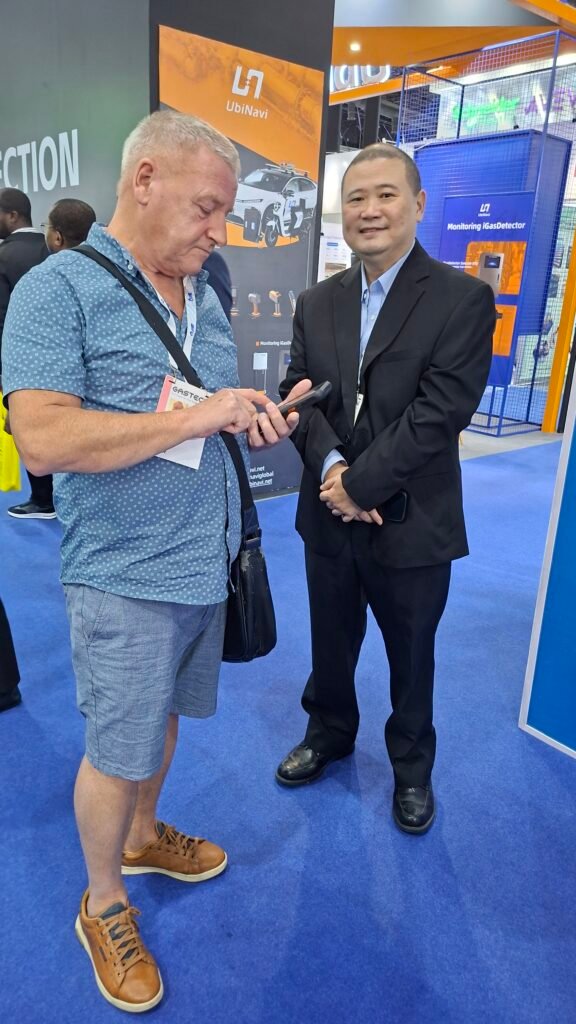 We talked first.
What do you currently inspect? How do you record it? What happens afterwards? Where does the report go? What part of that process causes problems?
Only then did we start showing HAMI Voice.
We could open previous templates and show how captured information became a structured report. From there, we’d move into a blank template to show the interface and how someone could work through it using voice or typing, depending on what made the most sense.
When the surrounding noise allowed it, we also used an interview template to demonstrate the voice technology working in real time.
That part occasionally became interesting because HAMI Voice is deliberately sensitive. In an outdoor or industrial environment, being able to capture someone’s voice clearly is exactly what we want. In an exhibition hall containing thousands of people having simultaneous conversations, sensitivity has another consequence.
Sometimes HAMI became a little too interested in what the person standing next to us was saying.
That being said, our most recent release has improved the voice recognition of single speaker immensely.
It all reinforced why taking a product out of the development environment matters. You can spend weeks testing something successfully in controlled conditions and then discover something completely different within fifteen minutes of putting it in front of real people in a real setting.
The questions people asked told us what our website wasn’t answering
After enough demonstrations, patterns started to appear.
Can I use my own templates? Absolutely. Take your existing templates and upload them to the platform and watch the magic happens as fields are mapped, tagged and ready to go.
How many templates can I upload? This depends on the tier that you choose. With the enterprise version of HAMI you can upload unlimited templates to the platform. Even with the small HAMI Lite you can enjoy having 3 unique templates to cover your workload.
Could it write to Oracle? HAMI Voice can be written into any system so long as we are provided with the API keys as we do have API webhooks.
Does it work offline? Right now were experimenting with offline capabilities, but as it stands the answer is partial yes. HAMI Voice can be used offline to capture inspection information by voice memos, with recordings stored safely on the device. Once you’re back online, HAMI processes the recordings and populates the relevant report fields automatically. We are in works to hold a full conversation with HAMI agent in offline mode, it will still require online connection to send the reports appropriate system.
Is it multilingual? HAMI Voice is being developed to support multilingual teams. If you speak to HAMI in Thai, for example, it can capture what you say and transcribe it in Thai. Our verified testing so far has been completed in English, Arabic and Portuguese with wider language testing still to come depending on the customer needs. You can even upload templates in your own language, then answer all questions in the same language – it will pick it up.
These questions came from different companies and different conversations, but they told us something useful. They showed us what prospective customers need to understand before they are comfortable enough to start thinking seriously about how HAMI Voice might fit into their own operation.
Some of those conversations also came from companies already using inspection or field software. The immediate reaction could be: we already have something that does this.
Fair enough.
But, it didn’t stop the conversation. In one case, we were discussing HAMI and this particular company told us they actually had their own software that they offered clients for inspections, but it didn’t have the voice technology. The more we spoke about, the more they realised how beneficial the all-round capabilities of HAMI could be. Next thing you know, they were asking for a business card and more information on using HAMI in their OWN company.
It reinforced something fairly obvious that our marketing hasn’t always communicated clearly enough: people need to understand the problem we’re solving before they care about the technology we’re using to solve it.
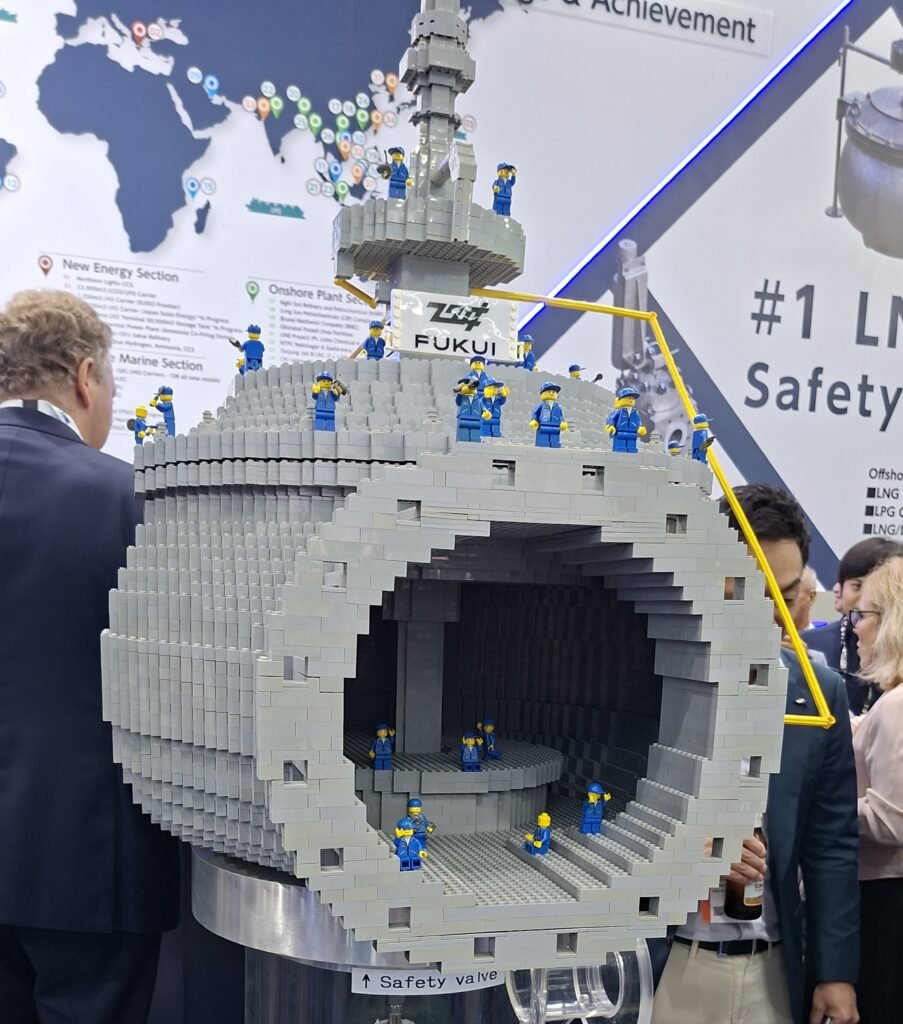
We need to get better at explaining HAMI Voice.
That may have been one of the most important lessons we brought home.
When somebody from the team explains HAMI Voice in person, the passion is obvious. We know why it was built, we’ve watched people use it in real inspection environments, and we can change the explanation depending on the person standing in front of us.
Our website and brochures don’t yet communicate that as well as we do face to face.
That’s now a priority.
There was another lesson too, and perhaps a more uncomfortable one.
Sometimes the word AI gets in the way.
Across Gastech, there was obvious interest in artificial intelligence, but there was also uncertainty around where it belongs, what businesses are actually supposed to do with it and how much people should trust it.
Bill’s takeaway from many of the conversations was that the industry isn’t necessarily rejecting the technology. In many cases, people simply don’t understand how they are expected to use it yet.
That creates a problem when the first thing you say is:
“Here’s our AI product.”
You’ve introduced one of the most divisive parts of the conversation before you’ve even explained what the product does.
For HAMI Voice, we’re increasingly finding that the better starting point is much simpler. HAMI is an instruction-based tool designed to help people capture and structure their own expertise.
The AI is part of how that becomes possible.
It isn’t the reason somebody should buy it.
The human should still be the expert
That messaging also connects directly back to the conversations happening on the Gastech stages.
We don’t want HAMI Voice positioned as technology that walks into an inspection environment and suddenly knows more than the person who has spent twenty years doing the job.
Quite the opposite.
The value lies in helping that person get what they already know into the right place with less friction.
If an experienced inspector sees something unusual, that observation matters. If an operator believes something isn’t right, software should not encourage them to ignore that instinct simply because a model hasn’t identified the same concern.
There are plenty of exciting things AI can do, and there will undoubtedly be more.
But somewhere along the way, the industry also needs to decide where the human stays in control.
For us, that’s not particularly complicated.
HAMI should support the expert, not try to become one.
And then there were the less technical lessons
Four days at an exhibition manages to feel incredibly long and strangely short at exactly the same time.
There were early starts, late finishes and, thanks to the Gastech Houston launch party on day three, at least one evening where professional networking became slightly more enthusiastic.
Inese, if you’re reading this, we’re happy to take one for the team and go to Houston next year.
Purely for market research purposes, obviously.
There were also several occasions on day one when Becca and Bill somehow managed to lose each other inside the exhibition. You would think modern telecommunications would have solved this particular problem.
Apparently not.
And for a venue containing an impressive number of bathrooms, actually finding one at the precise moment you wanted it occasionally felt like its own engineering challenge.
The most humbling moment, however, belonged to HAMI Voice itself.
During one demonstration, Becca became convinced something wasn’t working. Fields that should have appeared simply weren’t there, and what followed was around 45 minutes of trying to work out what had gone wrong.
Eventually came the facepalm.
The template contained conditional logic. One earlier field required a Yes response before the remaining questions would appear.
The software had done exactly what it had been told to do.
The human had not.
It’s a lesson she is unlikely to forget.
Four days changed how we think about HAMI Voice
We went to Bangkok expecting conversations about voice inspection software, field reporting and the energy industry.
We had plenty of them.
But we also came home thinking differently about how we explain the product, how much emphasis we place on AI and what customers actually need to hear before the technology begins to make sense.
We learned that people want to know whether they can keep their existing templates, whether HAMI can integrate with the systems they already use, whether it still works when the internet doesn’t and whether it can operate across international teams.
We also saw people challenge the product, ask difficult questions and then become considerably more interested once the conversation moved away from the technology itself and towards the work they were trying to get done.
That gave us product ideas, potential new customers and a rather longer development list than the one we arrived with.
But the biggest change was probably internal.
Four days at Gastech changed the team’s approach to HAMI Voice, its potential and, most importantly, how we talk about it.
Turns out the sore feet were worth it.
See what HAMI Voice could do with your inspection workflow
One lesson from almost every Gastech demonstration was that HAMI Voice becomes much easier to understand when people see it working with information they recognise.
So rather than taking our word for it, play with it yourself.
HAMI Voice has a 30-day free trial. Upload one of your own templates, work through it using voice or typing and see where it could reduce the amount of reporting work surrounding your inspections.
And if you’d rather show us your current workflow first, get in touch and we’ll work through it with you.