 VOICE-FIRST FIELD INSPECTION REPORTING

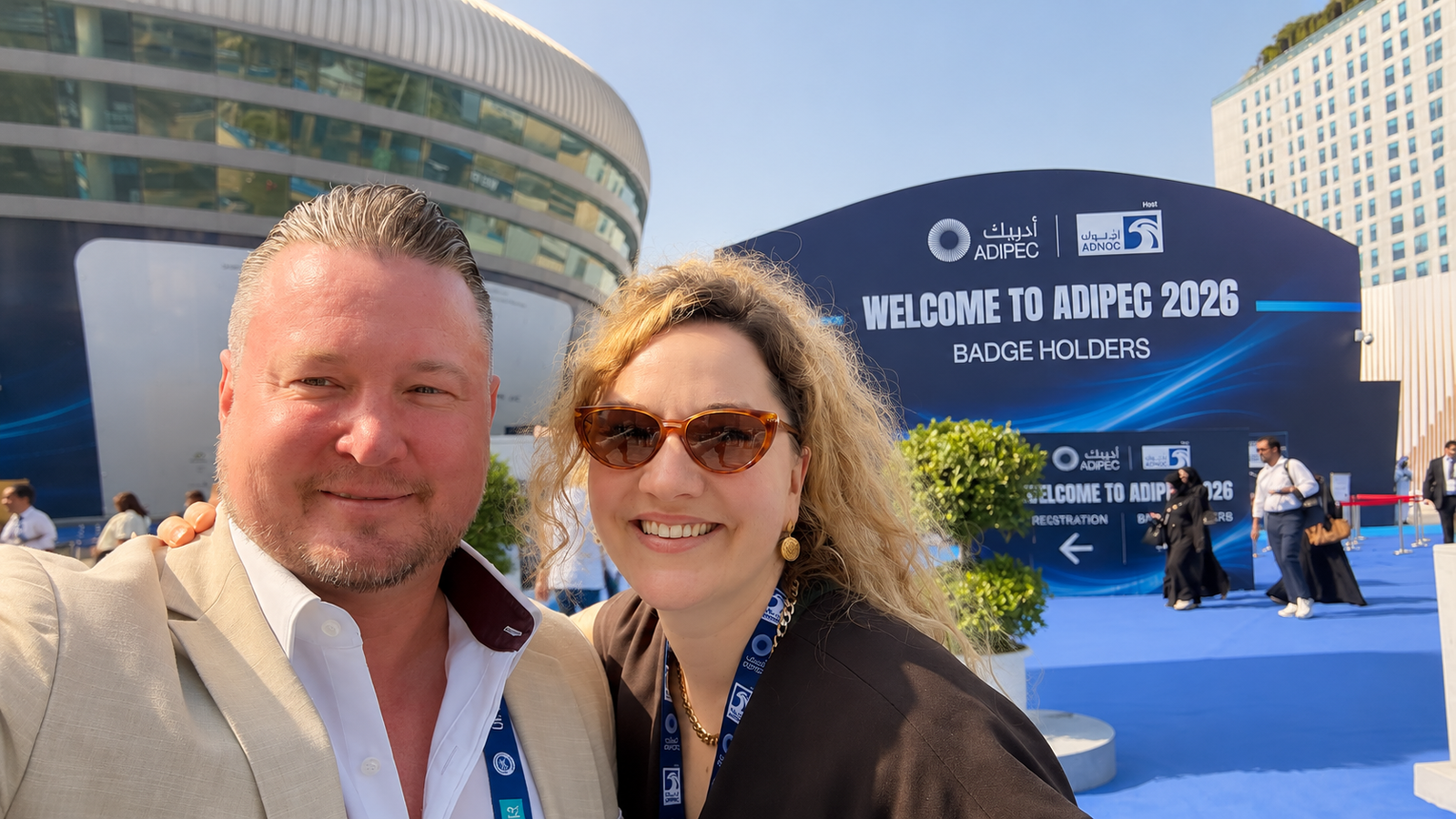
After a very full week at ADIPEC 2026, Inese finally had a Friday to recover.
Just kidding. This is Inese we’re talking about.
There were messages to send, conversations to follow up, notes to go through and all the usual post-conference jobs that somehow multiply while you’re busy collecting business cards and telling yourself you’ll definitely remember who everyone was when you get home.
Still, after four days in Abu Dhabi, there was plenty worth talking about.
Some of it was exactly what you’d expect from one of the world’s biggest energy events: AI, cybersecurity, data, resilience and some seriously impressive technology.
Some of it was less predictable.
But one thing that was definitely going to happen – Inese using HAMI Voice to help navigate the week.
First things first: ADIPEC knows how to run an event
For something this big, ADIPEC was surprisingly painless once you actually got there.
The staff were lovely, queues weren’t ridiculous and the venue itself was very well organised. It was also air-conditioned to within an inch of its life, which becomes particularly appreciated the second you step outside and remember that you’re in Abu Dhabi.
The commute from Dubai was another story.
Inese described the roads as “mental”, which we’ll leave as the official technical assessment for now.
The drive did at least come with some spectacular scenery. Between Dubai and Abu Dhabi, you pass the kind of architecture that makes staring out of the window considerably more interesting than the average conference commute.
So, traffic aside, we were off to a good start.

The Dubai to Abu Dhabi commute. Questionable driving, excellent views.
We expected lots of AI talk. We got lots of AI questions instead.
AI was everywhere at ADIPEC, but what stood out was that the conversations weren’t simply about how quickly everyone could use more of it.
There was much more caution than that.
Inese sat in on C-suite roundtables and AI theatre sessions where conversations kept circling back to the same issues: data sovereignty, cybersecurity, resilience and how you introduce new technology without creating an entirely new set of problems in the process.
That caught our attention.
We’ve all sat through enough conversations where adding “AI-powered” to something is apparently expected to make it instantly more exciting.
At ADIPEC, the questions felt more grown-up.
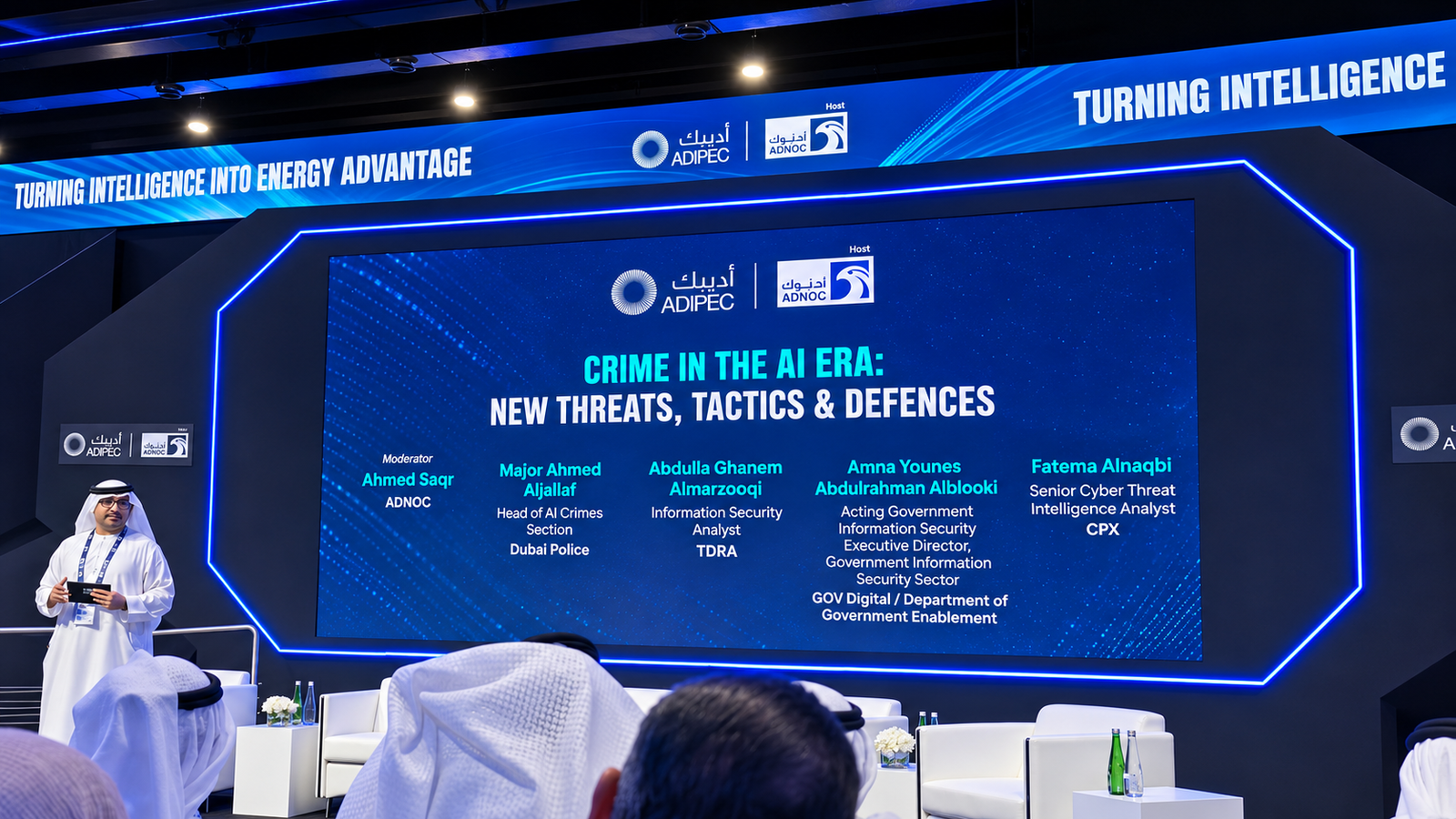
Where is the data going?
Who has access to it?
How do you protect critical infrastructure?
What happens if the system gets something wrong?
And, perhaps most importantly, where does the human still make the decision?
Those are far more interesting questions and very similar to the ones we experienced at BITEC earlier in the year.
The human still needs to know more than the software
This is something we’ve been thinking about a lot with HAMI Voice.
We aren’t trying to create software that tells a highly experienced inspector, engineer or technician that it knows their job better than they do.
That would be a fairly quick way to get HAMI thrown into the sea.
The person doing the work still brings the judgement, experience and context.
HAMI’s job is to make it easier for them to capture that expertise, structure it and turn it into something useful without spending half their life typing reports.
The AI sits behind that process.
It helps.
It doesn’t suddenly get promoted to Senior Inspector.
That distinction felt particularly relevant after listening to some of the conversations happening around ADIPEC.
And this time, Inese actually used HAMI rather than just talking about it
One of the more interesting bits of the week happened before Inese even started telling people about HAMI Voice.
She was using it.
Instead of arriving with a list of companies and then wandering around hoping she happened to stumble across the right stand, she had prepared her event list in the app beforehand.
She used the map to work her way around the exhibition, kept travel information and local alerts available, and captured notes as she went.
This was the first time she’d really used that particular part of the setup herself in a live event environment.
And thankfully, it worked.
There is something slightly exhilarating about finally becoming the person using the product you’ve spent months telling everyone else to use.
A demo is controlled.
You know what you’re going to press.
You know what you’re going to say.
You know exactly which part you’re going to show.
Walking around one of the world’s biggest energy exhibitions while relying on it yourself is slightly different.
Suddenly the questions become much more practical.
Can I find what I need quickly?
Does this save me having seventeen different notes open?
Can I remember why I wanted to speak to that company at Exhibit 2954?
Will any of these notes still make sense on Friday?
Those are excellent product tests.
Because conference note-taking is its own special kind of chaos
If you’ve ever spent several days at a large event, you’ll know the system.
You collect a business card.
Take a photograph.
Write three words in your phone.
Screenshot somebody’s LinkedIn profile.
Tell yourself you’ll remember the conversation.

Leo reviewing the leads. His follow-up rate remains questionable.
Then, four days later, look through your camera roll and wonder why you have a photograph of someone’s badge, a robot, two coffee cups and half a booth.
I get these photos through WhatsApp too, which has created a little game we like to call Gotta Guess Them All: I get the image first, then spend the end-of-week write-up trying to work out the context and match it back to the right conversation.
This is increasingly where we’re finding another use for HAMI Voice.
The inspection use case is still very much at the heart of what we’re building, but the basic problem is surprisingly universal.
You know something.
You want to capture it.
Typing it all out is the annoying bit.
At ADIPEC, that meant recording thoughts, conversations and follow-ups while they were still fresh rather than hoping they survived until the flight home.
Security was definitely not an afterthought
One of the strongest themes of the week was how seriously companies in the region are thinking about security.
As we mentioned, data sovereignty was a big part of the discussion, particularly when AI systems are processing information that may be operationally or commercially sensitive.
Cybersecurity was equally prominent.
For an industry built around critical infrastructure, that makes perfect sense.
You can’t have a serious conversation about introducing more connected technology without also asking what happens to the information moving through it.
And what was interesting at ADIPEC was that these weren’t conversations happening in a separate little cybersecurity corner.
AI, security and resilience were being discussed together.
That’s probably exactly where they belong.
Resilience came up again and again too
Another word Inese heard repeatedly was resilience.
Again, perhaps not particularly surprising given the energy industry and the part of the world we were in.
Energy prices move, markets change and geopolitical conditions shift, but the infrastructure still has to work.
Technology can absolutely help companies respond to that, but the tone at ADIPEC wasn’t simply “automate everything and hope for the best”.
There was much more emphasis on using technology carefully, protecting the systems underneath it and making sure humans still understand what’s happening.
We quite liked that.
The Middle East feels like a different technology conversation
One of Inese’s strongest impressions was that discussions around AI and industrial technology in the UAE felt noticeably different from similar conversations in the UK.
There was plenty of ambition, but it was closely connected to infrastructure, national resilience, data and security.
That is one of the reasons travelling to events like ADIPEC is useful.
Yes, you meet potential customers.
Yes, you catch up with people you’ve been emailing for six months.
Yes, you inevitably come home with a bag full of branded objects you absolutely did not need, which you then give away to the neighbours as souvenirs.
But you also hear your own industry discussed from a completely different perspective.
That can be considerably more useful than another afternoon staring at market research.
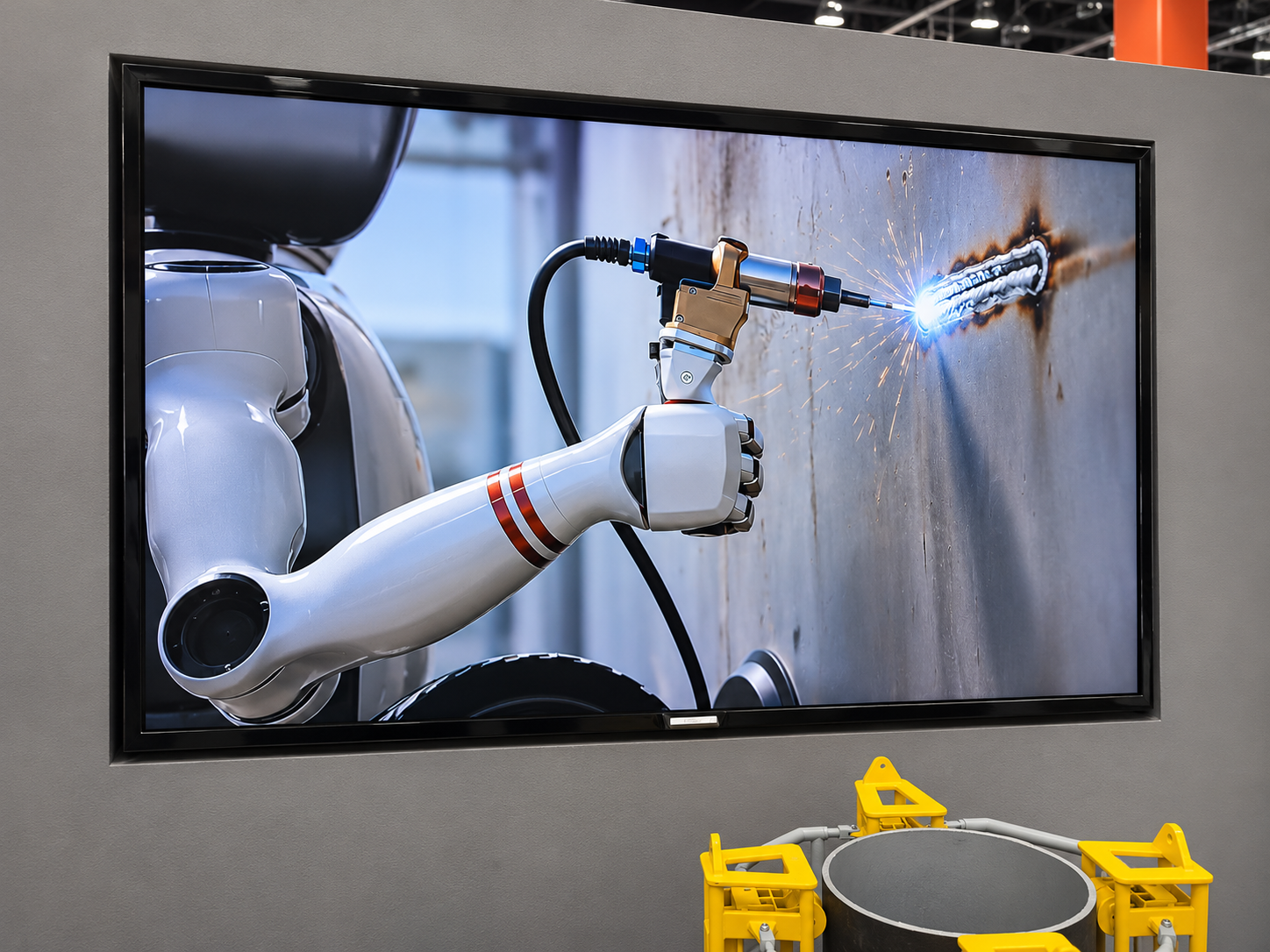
There were also some very good screens
Not every revelation at ADIPEC was philosophical.
One exhibition display genuinely stopped Inese in her tracks because the screens were unlike anything she’d seen at an event before.
That is fairly high praise considering the number of exhibition stands this team has seen recently.
There were also some excellent national areas, plenty of interesting technology and some very good conversations with existing contacts, including Gareth from Trident Engineering and Graeme from AISUS.
Most importantly, however, the Dutch area had Stroopwafel.
This is obviously the sort of detailed market intelligence people come to the HAMI Voice blog for.
The Korean stand also provided a little fan, so points there too.
Then Friday arrived
After four days of meetings, walking, talking, panels, demos and commuting between Dubai and Abu Dhabi, Friday was finally going to be the recovery day.
It lasted approximately half a cup of coffee.
Because once an event ends, the other part begins.
Who needs a message?
Who asked for more information?
Which conversation needs following up?
What did somebody say on Tuesday that sounded like a genuinely good idea?
And who was that person whose business card is currently sitting beside your coffee cup?
This is the bit that doesn’t usually make it onto LinkedIn.
The conference finishes.
The work carries on.
So what did we actually bring home?
So far, not Inese, who is still in Dubai.
What ADIPEC did bring home, though, was a clearer sense of where the AI conversation in energy is heading. It didn’t convince us that AI is going to be important in the industry. We already knew that.
What it did show us was that the conversation is becoming much more sensible.
Companies aren’t only asking what AI can do anymore.
They’re asking whether they should use it, where the information goes, how secure the system is and whether the technology actually makes the person doing the job better at what they already do.
Those are exactly the conversations we want HAMI Voice to be part of.
HAMI shouldn’t replace the expert.
It should make the expert’s life easier.
And perhaps the nicest part of the week was that, while Inese was talking to people about exactly that, HAMI Voice was quietly helping her get through ADIPEC itself.
Not bad for a product that usually spends its days talking about inspection reports.
Try HAMI Voice on something that currently takes too long
HAMI Voice has a 30-day free trial, which means you don’t have to take our word for any of this.
Upload one of your own templates and try it.
Use it for an inspection, a report or a workflow where you’re currently spending far too much time typing information you already know.
Or take it somewhere unexpected.
We’re doing that quite a lot ourselves lately.