 VOICE-FIRST FIELD INSPECTION REPORTING
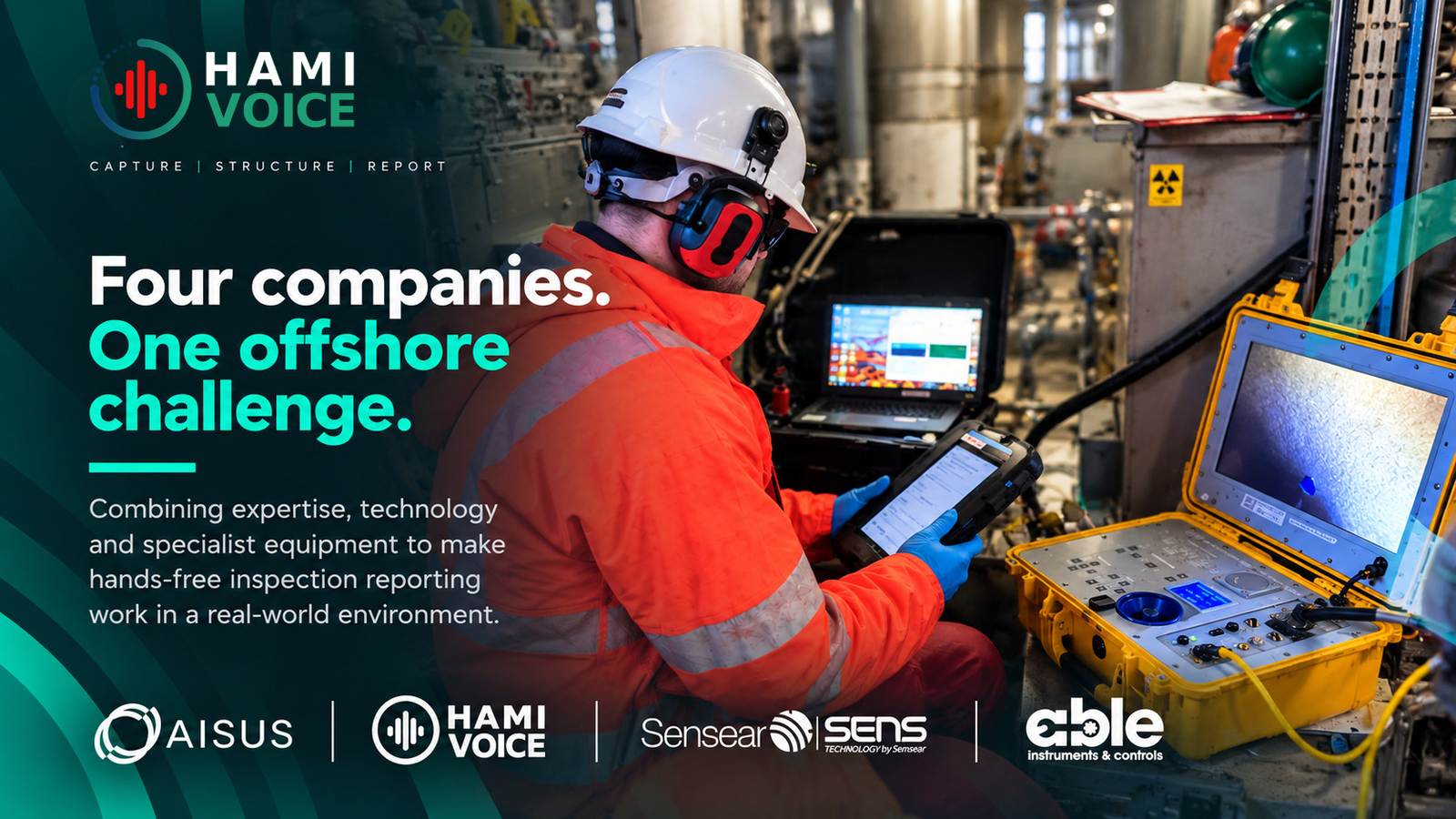
What happens when you bring together inspection specialists, voice-led reporting software, industrial equipment expertise and specialist communication technology? In our case, quite a lot. There was testing, a few technical headaches and, eventually, a successful offshore trial.
Getting new technology into the field isn’t always as straightforward as it looks on paper. Especially when that field happens to be an offshore installation, surrounded by machinery, background noise and equipment that has to meet strict operational requirements.
For AISUS, HAMI Voice, Able Instruments and Sensear, getting voice-led inspection reporting working in those conditions became a collaborative effort that took us from early warehouse trials to testing offshore.
And it all started with a conversation.
It started with an idea and a company willing to give it a go
Before HAMI Voice was ready for offshore use, there was a concept, a presentation and a question: could inspectors capture their findings as they worked, using their voice instead of constantly stopping to type or write things down?
The early discussions with the inspection team were encouraging. And by encouraging, we mean everyone was rather excited about it. They could see the potential for their work and were willing to help explore whether the idea could become something practical.
But there is a big difference between demonstrating an idea on a slide and putting it in the hands of an inspector.
The first prototype took several months to develop, and the team began testing it with AISUS in a warehouse environment.
Those early sessions were eye opening, because they showed us just how much still needed to be done.
The original software had been developed with mobile devices in mind. Real inspection workflows introduced the need for laptop and desktop compatibility, repeated findings across inspection items, calculations, photographs and more detailed reporting requirements.
The testing wasn’t simply about whether voice recognition worked. It was about whether the entire process made sense for the person carrying out the inspection. Because if it didn’t work for the inspector, what was the point?
AISUS helped bring those practical requirements into focus, and the feedback played an important role in shaping the software’s development.
The next challenge wasn’t the software. It was the equipment.
By May 2026, the team was looking towards offshore testing.
HAMI Voice had already been through trials in noisy environments, but taking it offshore introduced another set of problems.
The first was finding a headset that would actually work with the computers and equipment being used.
Different connections and adaptors were tried. Some wouldn’t transmit audio correctly. Others couldn’t get the microphone working. A few combinations showed promise but weren’t suitable for the environment they would ultimately be used in.
And then there was the noise.
Anyone who has worked around offshore machinery knows that a quiet office isn’t exactly a realistic comparison. For voice-led reporting to be useful, the headset needed to capture the inspector’s speech clearly enough to work alongside all that background noise.
There were also the practical requirements of using appropriate equipment in potentially hazardous environments.
A headset that works perfectly well at a desk isn’t necessarily the right headset for an offshore inspection.
So the search continued.
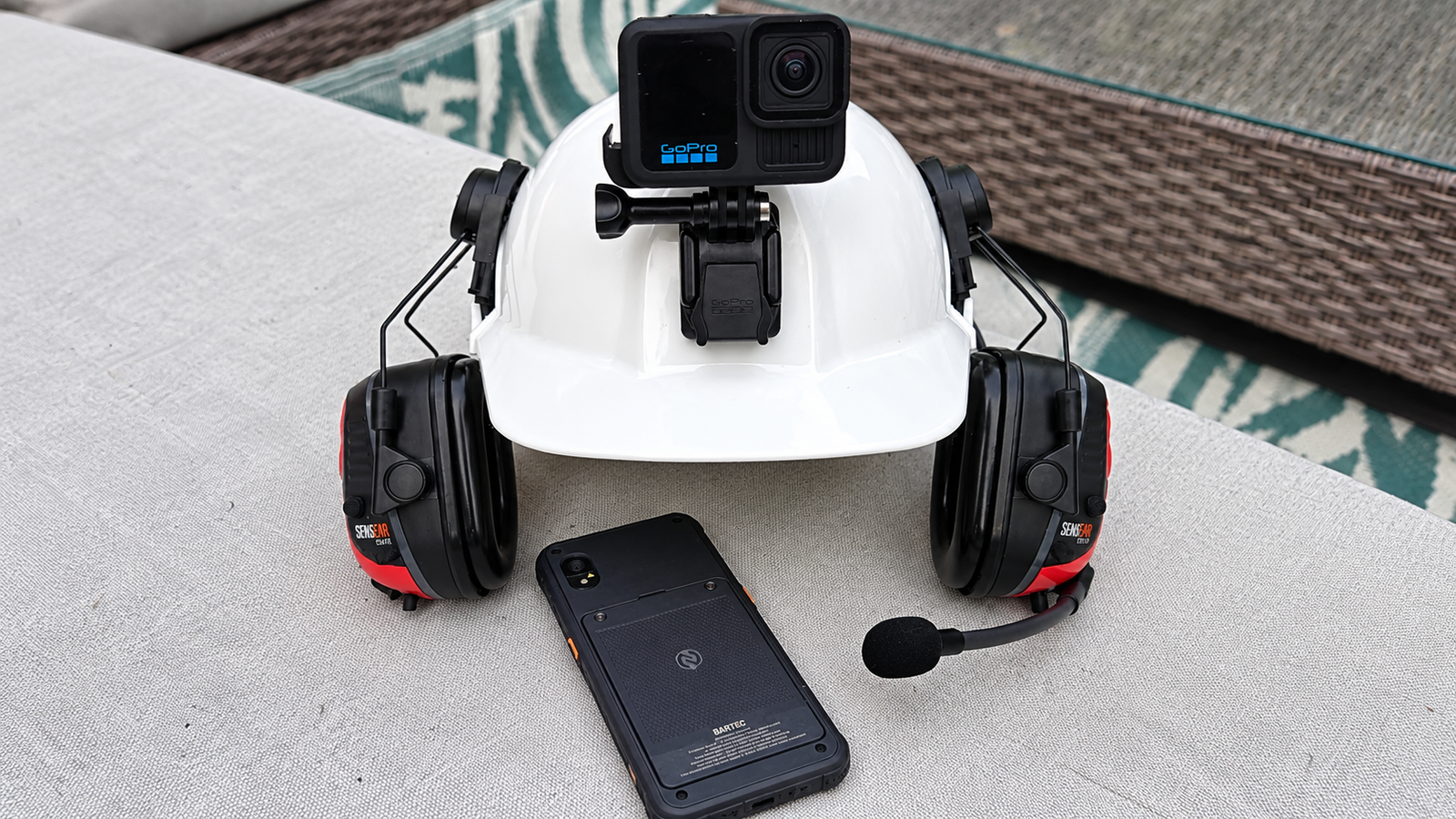
Sometimes the right conversation makes all the difference
A visit to Seawork in Southampton helped move things forward.
The team had been exploring alternative equipment options when a connection with Andy Cooper from BARTEC led to an introduction to Able Instruments.
Andy also helped provide an ATEX-certified BARTEC mobile device for testing.
Through Luke Costello at Able Instruments, the team was able to explore suitable headset equipment with Sensear, whose specialist communication technology is designed for demanding, high-noise working environments. Bingo!
This brought together the different pieces of the problem.
AISUS understood the inspection work and the conditions the equipment needed to operate in. HAMI Voice provided the software for capturing and structuring findings. Able Instruments helped coordinate suitable equipment, while Sensear brought specialist headset technology into the testing.
Rather than expecting one product to solve everything, the companies worked together to find a combination that could meet the practical requirements.
But after the earlier compatibility problems, nobody was particularly keen to send the equipment offshore without checking it properly first, and who could blame them.
Back to testing. 246th times the charm.
Before anything went offshore, the team carried out further compatibility testing.
The Sensear headset was tested alongside HAMI Voice on laptops, tablets and mobile devices, checking that the equipment could communicate properly and that voice capture worked as expected.
Both online and offline operation were tested, an important consideration for locations where connectivity isn’t always reliable. The North Sea isn’t exactly known for it’s stellar receiption.
Earlier testing with AISUS, including work involving Michael Fawcett, had already helped establish how the equipment and software performed together.
The results gave the team the confidence to move forward.
With equipment coordinated through Able Instruments, including the specialist headset and mobile device, the next step was to put the setup into a genuine offshore working environment.
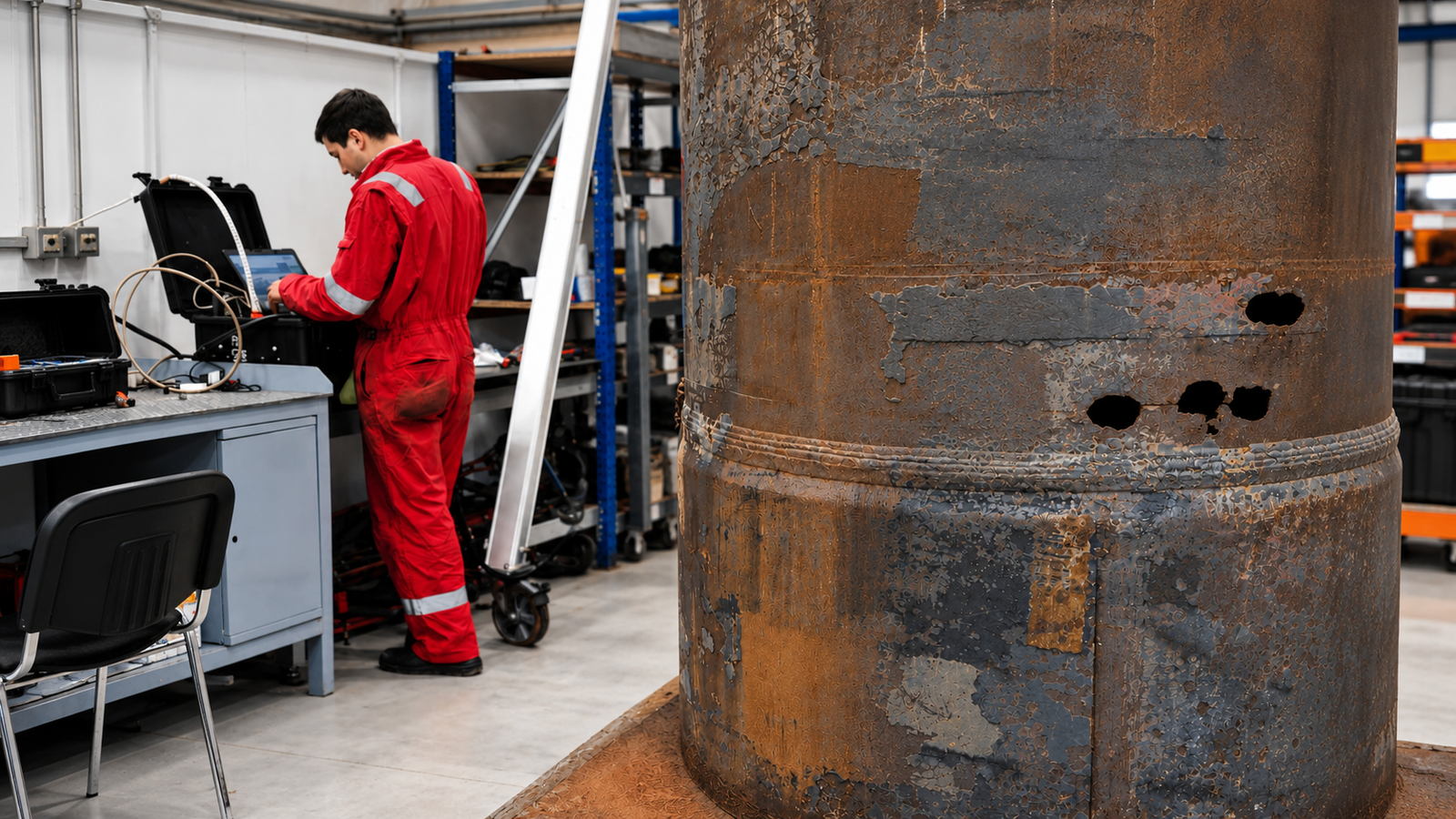
The real test: offshore
In late August 2026, the equipment was prepared for offshore trials.
Dylan Aitken, the field services technician carrying out the testing, took the combined setup into an operational offshore environment.
This was the moment that mattered. The moment of truth.
There would be machinery running, background noise, real inspection tasks and all the usual practical challenges that come with working offshore in a hazardous environment.
The aim was to find out whether the technician could actually use voice-led reporting while doing the job, rather than having to stop work to operate the reporting software.
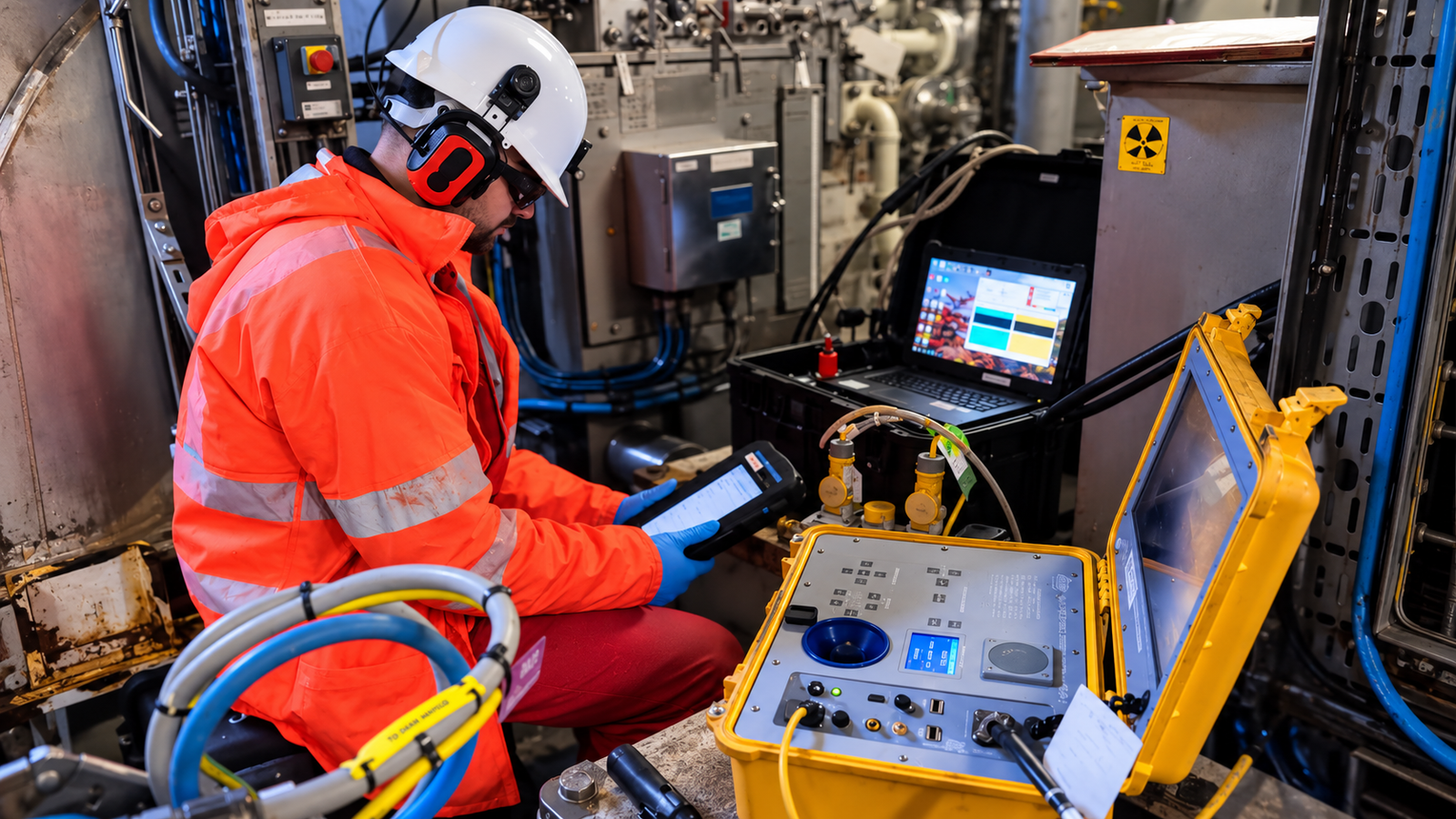
During the trial, Dylan was able to respond to HAMI Voice prompts, capture inspection information and add photographs while carrying out his work.
The headset supported voice capture despite the surrounding noise, and the software was able to process Dylan’s Scottish accent without any problems. Anyone familiar with Burnistoun’s famous voice-controlled lift sketch will appreciate just how satisfying that was. Eleven!
GoPro footage was also captured during testing, helping document how the equipment performed in the working environment.
And importantly, the combined setup worked. (Can we get a hallelujah.)
After months of development, equipment changes and testing, the team had demonstrated that voice-led inspection reporting could be used in a demanding offshore environment with the appropriate equipment.
It was an encouraging result for everyone involved.
Four companies, different expertise, one shared result
What makes this collaboration interesting isn’t simply that a piece of software worked offshore.
It’s how many different areas of expertise were needed to get there.
AISUS brought the practical inspection experience, real-world testing requirements and willingness to explore a different way of working.
HAMI Voice, developed by IPGN Solutions, provided the voice-led reporting technology, with its functionality shaped and refined through feedback from the testing process.
Able Instruments helped bridge the gap between the software and the specialist equipment needed to make the combined setup practical.
Sensear provided specialist headset technology that helped address one of the biggest challenges of all: capturing speech in a noisy working environment.
There were plenty of obstacles along the way, and not every early test produced the result anyone had hoped for.
But those setbacks were useful. Each one helped identify something that needed to change, whether that was the software, the equipment or the way the two worked together.
The successful offshore trial was the result of that combined effort.